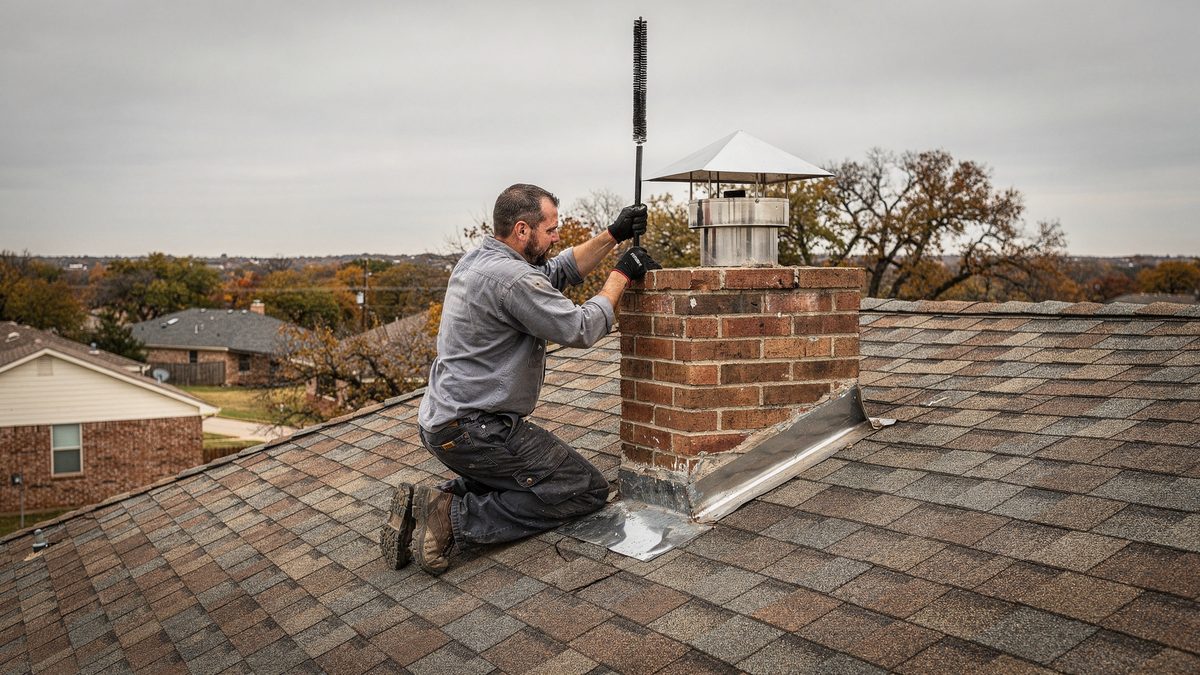
What Sweeping Removes, and Why It Matters Here
Sweeping removes creosote and soot from the flue walls. Creosote is the condensed, unburned portion of wood smoke, and in its later stages it is a hard glazed deposit that burns. That is the whole reason the job exists.
The federal number worth knowing: the US Fire Administration counted roughly 34,200 heating fires in residential buildings a year across 2017 to 2019, and 77 percent were confined fires, specifically those confined to chimneys, flues or fuel burners. Heating was the second leading cause of residential building fires after cooking.
That is what an annual sweep is buying you.
Sweeping Is Not the Same as an Inspection
They travel together and they are different things. Sweeping is cleaning. Inspection is the assessment, and NFPA 211 defines three levels of it in Chapter 15. A routine cleaning carries a Level I inspection with it: readily accessible portions of the chimney, the appliance and the connection, plus confirmation the flue is clear of combustible deposits and obstruction.
We record what the Level I found in writing and hand it to you. If it turns up a condition that a Level I cannot properly evaluate, we say so rather than guessing.
How Often, and What NFPA Actually Says
NFPA 211 §14.2 is short: chimneys, fireplaces and vents shall be inspected at least once a year, and cleaning, maintenance and repairs done if necessary. There is no fixed cleaning interval in the standard, because the right interval depends on what you burn and how much.
Practically: burn seasoned hardwood a few times a month through an Oklahoma winter and once a year is right. Burn green or unseasoned wood, or run a stove as a primary heat source, and you will want it looked at more often than that.
What to Ask Before You Book Anyone
Oklahoma does not license chimney sweeps. The Construction Industries Board regulates six trades and chimney work is not among them, which means anyone can print a card and call themselves a sweep here. The credential that carries weight is CSIA certification, renewed on a three-year cycle through continuing education or re-examination, with a Code of Ethics that CSIA will actually revoke a certificate over.
Ask for it. A certified sweep produces it without hesitation, and CSIA runs a public directory you can check a name against yourself.
Chimney Sweeping Available In
- Tulsa, OK Tulsa County
- Broken Arrow, OK Tulsa and Wagoner Counties
- Jenks, OK Tulsa County
- Owasso, OK Tulsa and Rogers Counties
- Bixby, OK Tulsa and Wagoner Counties
Chimney Questions, Answered
- How often should a chimney be swept?
- NFPA 211 requires an annual inspection rather than an annual cleaning, and cleaning when the inspection calls for it. For most Tulsa households burning seasoned wood recreationally, that works out to once a year.
- Is chimney sweeping licensed in Oklahoma?
- No. The Construction Industries Board licenses electrical, mechanical, plumbing, roofing, building inspectors and home inspectors. Sweeping and masonry chimney repair are not licensed trades here, which is exactly why CSIA certification is worth asking about.
- Will sweeping make a mess in my house?
- It should not. The work is done under negative pressure with the fireplace opening sealed and a HEPA vacuum running. Ask how a sweep contains dust before booking; the answer tells you a lot.
- Do gas fireplaces need sweeping?
- They need inspection more than they need brushing. Gas appliances deposit little creosote, but their venting still blocks, corrodes and disconnects, and NFPA 211's annual inspection requirement covers vents as well as chimneys.